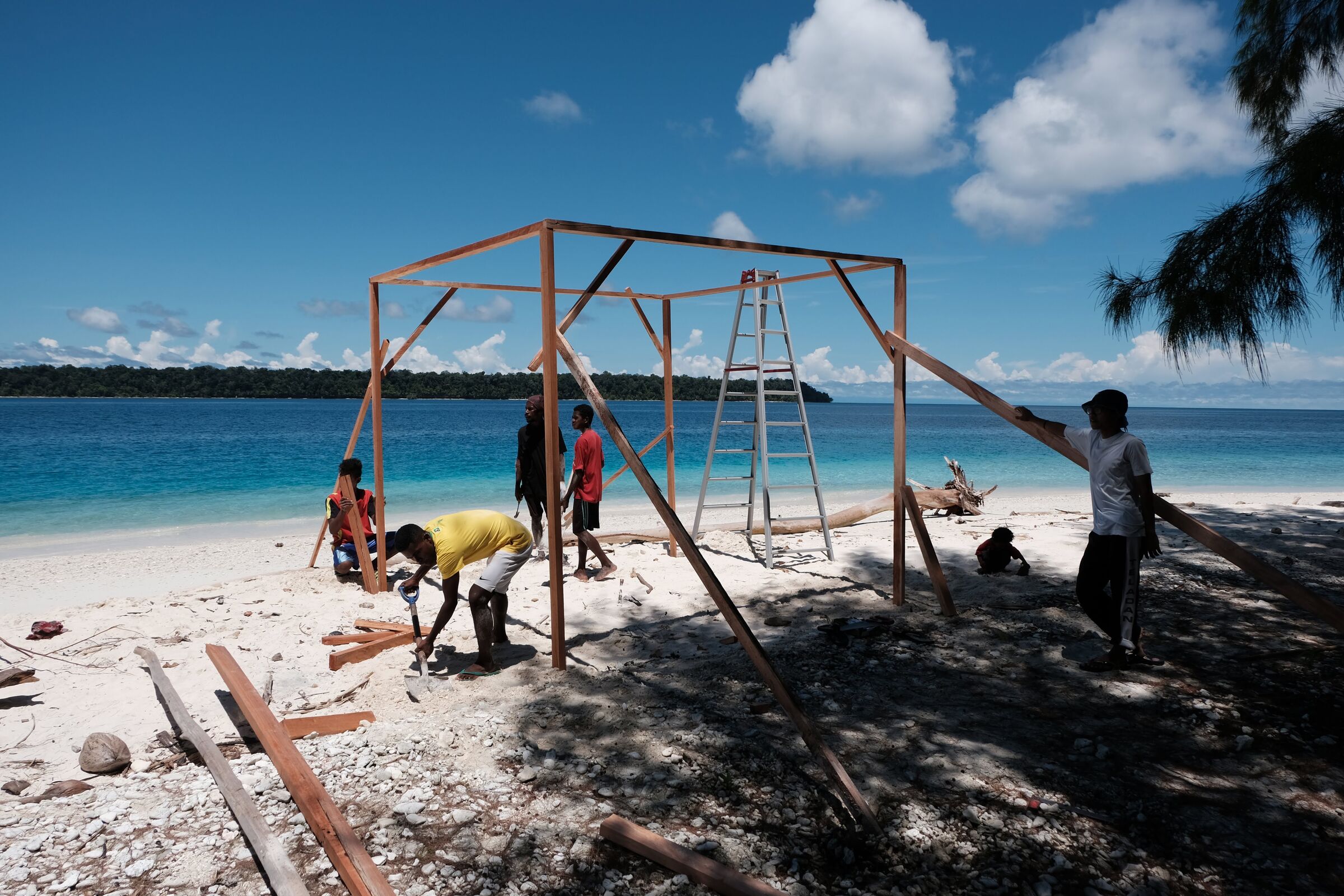
I went to Papua because I wanted to.
Not many people from my university got the chance. Papua is far, expensive, and hard to move around in. Flying to the US from Indonesia is often cheaper. I’d been assigned to a community service team in another part of the province, but when a slot opened on the Biak team I asked to switch. The friend who’d had it was being sent to represent the university at a competition in Japan. The Biak team had a historic reputation in the program: every member committed from day one, every member bringing something to the table. Two weeks before they flew, the slot was mine. I packed in a hurry.
From infrastructure to people
The plan was simple and slightly arrogant. Build infrastructure A, B, C. Hit the metrics. Go home. That’s how university programs measure themselves and that’s how we showed up.
The first meeting with the local officials cured us of that. They welcomed us warmly with one quiet warning baked in: these kids came all the way from Java, treat them well. Then we watched a local man twice my age scale a coconut tree to fetch fruit for the officials. He climbed barefoot, dropped half a dozen coconuts at their feet, climbed down, and did not expect a single rupiah. The officials didn’t blink. We did.
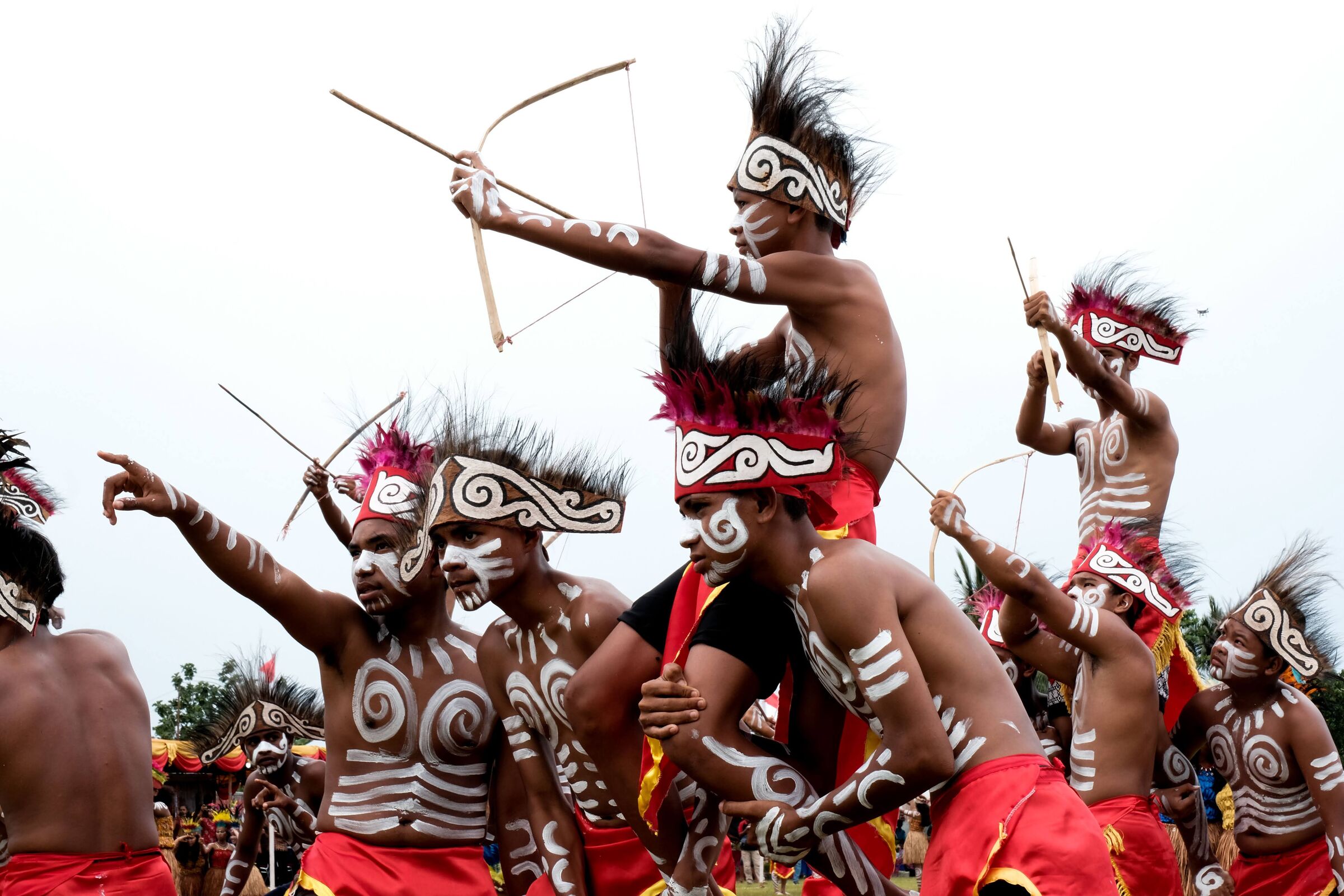
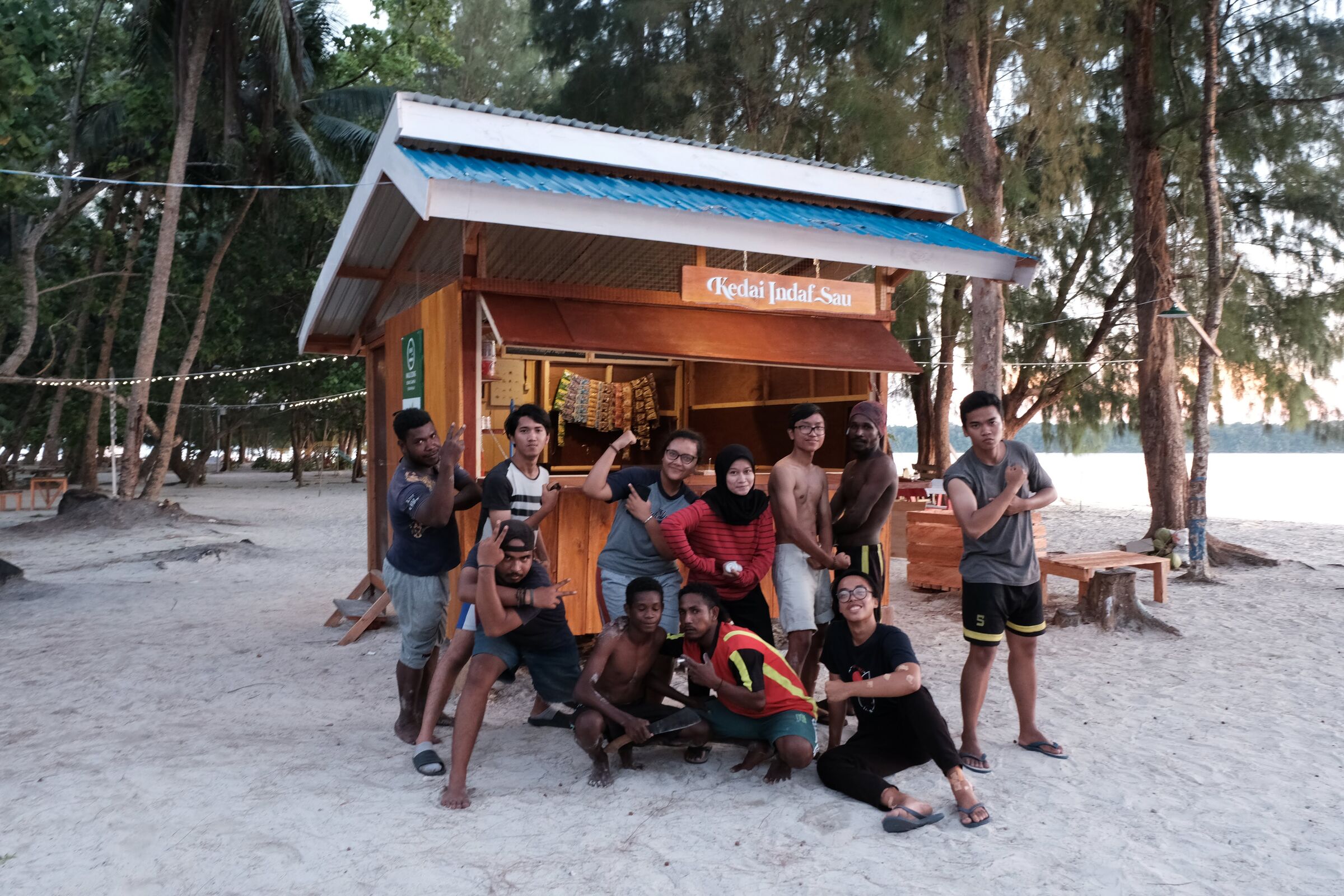
We rewrote the goals that night. Less about what we’d build, more about what we’d leave behind that wasn’t a building. Confidence, mostly. Skills they could use without us. We worked with a few families to commercialize their services. Guided tours, hosted meals, a small beachfront kiosk we sketched out together. They told us, towards the end, that it was the first time anyone had visited and wanted them to actually succeed, instead of just hosting some ceremony for the photos.
The shape of a day
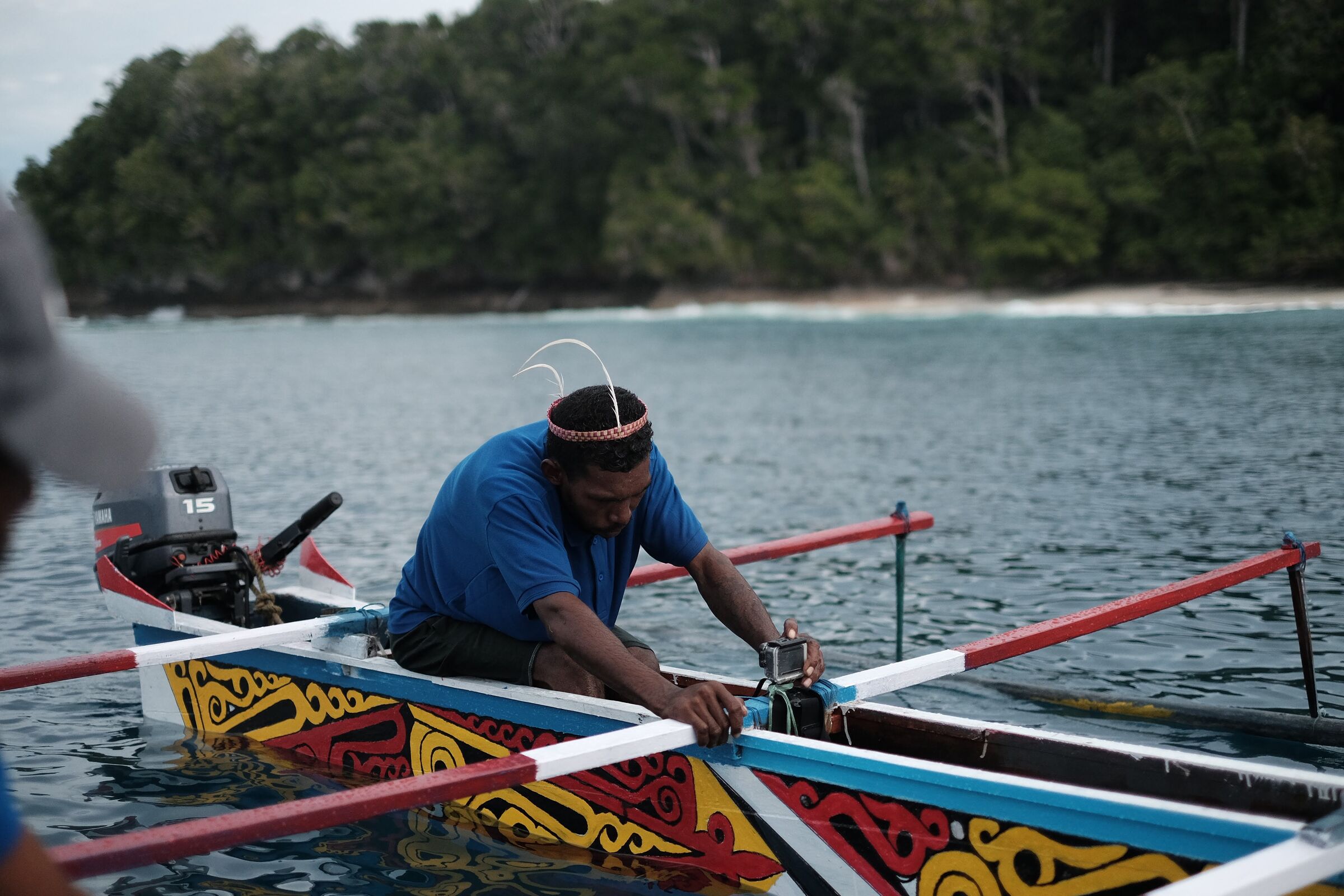
Days had a shape. Most mornings you worked: digging foundation, mixing concrete, hauling lumber. If you drew “city duty” you took a four-hour boat ride to the nearest town for supplies. The trade was a few hours of “city” life — signal, hot food, asphalt — for half a day each way on a bumpy wooden boat.
With no signal at base, you had to actually talk to each other. I learned more Javanese in two months in Papua than I had in three years of living in Yogyakarta. A single Novo Amor song looped on a tinny speaker every evening, so many times that I cannot hear the opening chord today without smelling smoke and salt and bug spray.
Twenty-nine of us, and cooking went on rotation. Each team took a week of breakfasts, lunches, and dinners. Every team had a leader who was, on paper, a good cook. Ours was on a different kind of paper. By Wednesday we knew which shifts to look forward to and which ones to brace for. I will not name names.
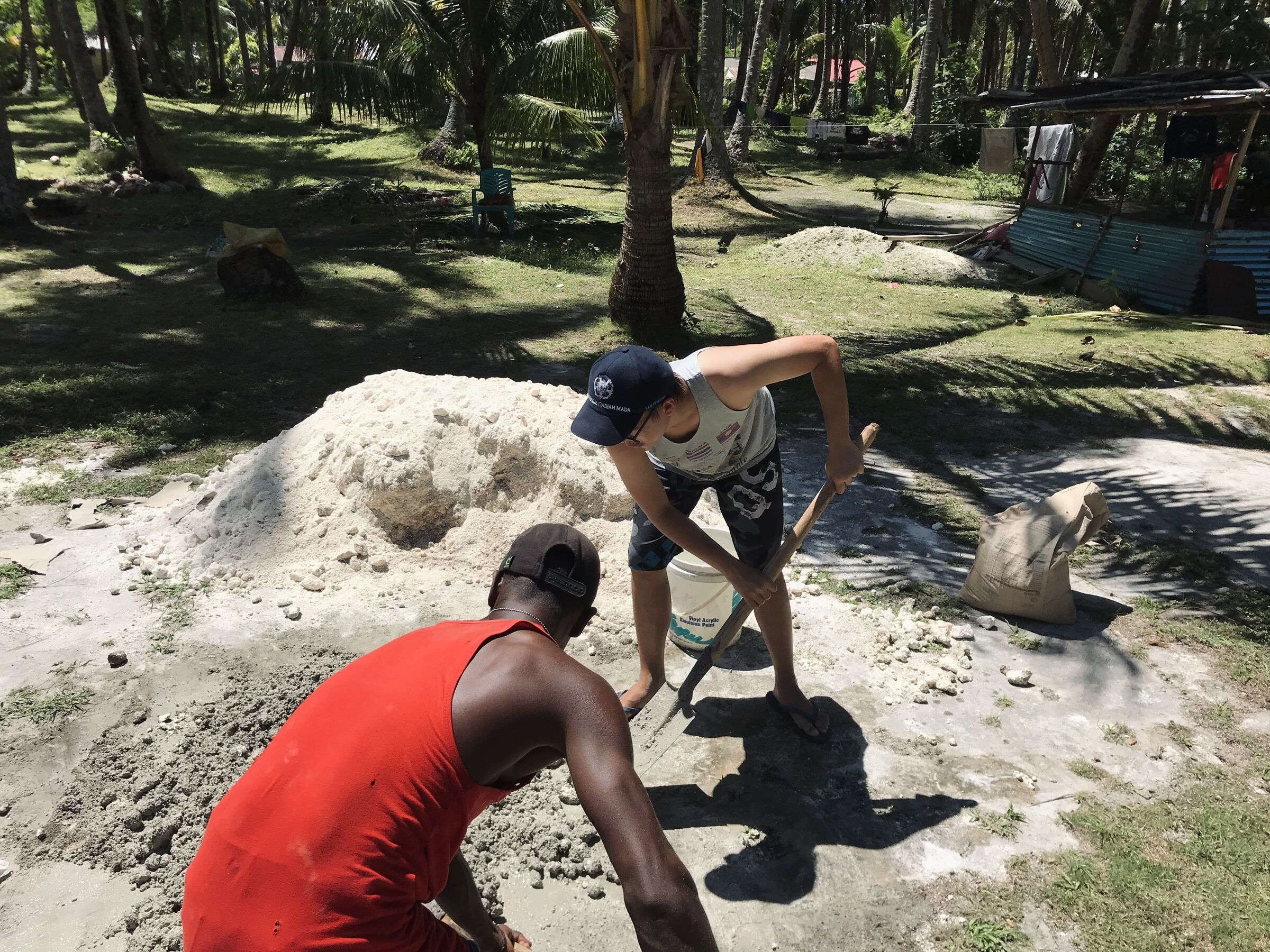
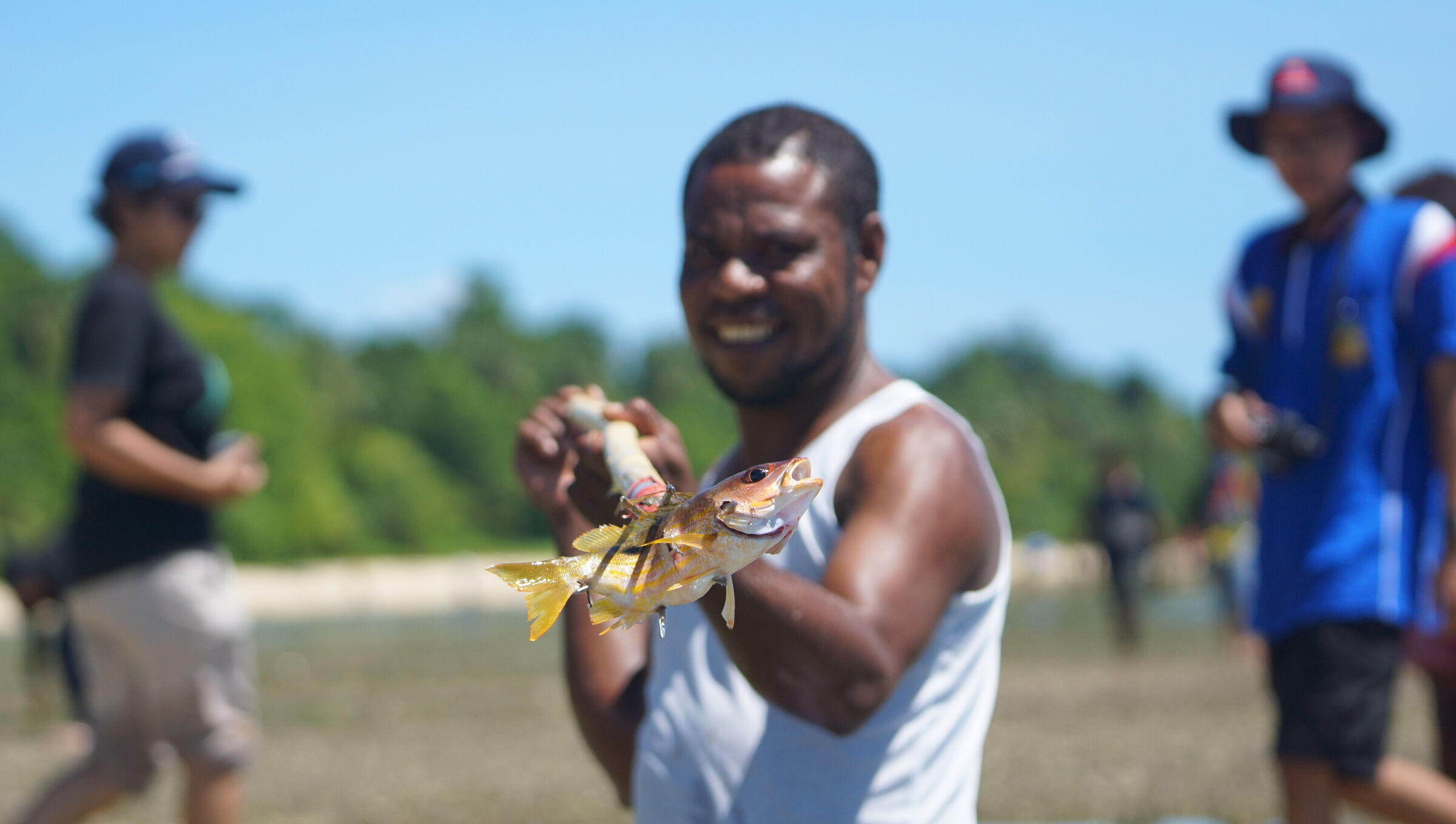
The diet was fish, fish, and fish. Around week three the smell of grilled fish stops being romantic and becomes something you negotiate with. We started fantasizing about chicken with the focused desperation of people who had no other options. Twice a month a delegation of officials would come from town and bring proper Minang food with chicken in it, and we would behave ourselves with the dignity of stray dogs at a wedding.
What Biak takes
Biak does not let you off easy. Clean water was a project to acquire. Wounds didn’t heal because they couldn’t dry. The flies were committed. The mosquitoes were on another level entirely. I lived in shorts and flip-flops, which is how I ended the trip with over fifty open mosquito sores on my legs and an intimate working relationship with band-aids. Half a pack per shower. The team mocked me the entire time. I would absolutely do it again.
Toward the end I wanted to swim badly enough that I wrapped both legs in plastic wrap and walked into the ocean. It sort of worked. It might have made things slightly worse, but the legs were so far gone by then that any new damage felt cosmetic. I reapplied band-aids in a militant grid afterward and counted the swim as worth the cost.
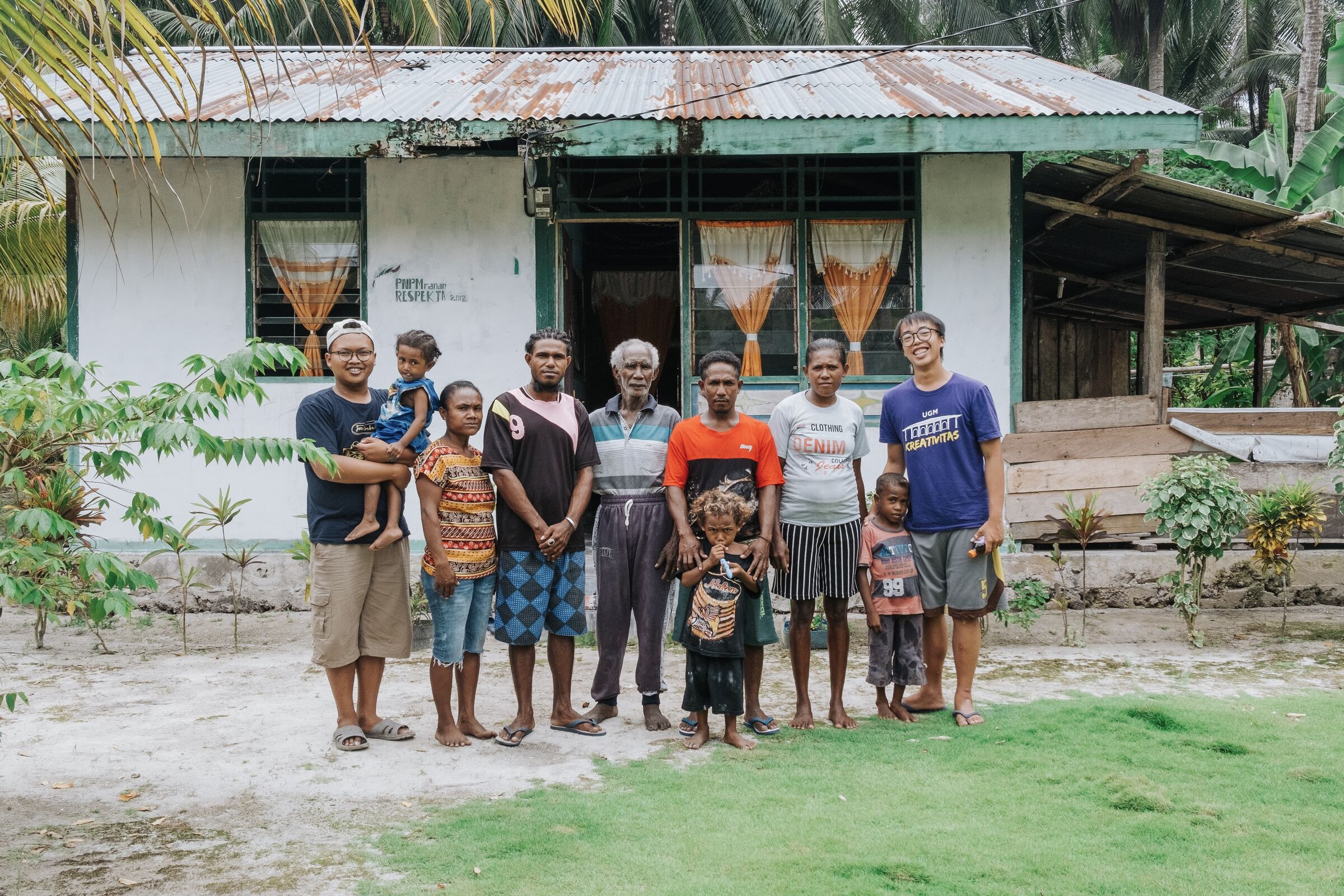
I think about Biak the way you think about a relationship that taught you something. Two months on an island with twenty-eight other people, no internet, too many fish, all of the mosquitoes, and a kiosk we built together that I’d fly back to check on tomorrow if Biak weren’t so hard to reach. These are the people I look forward to seeing every time I land in Indonesia. I joined this team late, on purpose. It became one of the most important things I did in college.